
Buyer Guide · Sourcing from India · Erode, Tamil Nadu
If Solapur is known for towels and Karur for finished made-ups, Erode is the cluster hospitality buyers are least likely to have heard of — and the one quietly doing the dyeing and processing work that other clusters, including its more famous neighbours, depend on. Erode doesn’t have a single signature hospitality product the way Solapur has terry towels. What it has is scale, processing depth, and a growing base of home-furnishing exporters that most sourcing conversations skip past entirely.
A cluster built on volume and versatility, not one specialty
Erode is often called the “Powerloom City of India,” and the numbers back that up: an estimated 1.5 lakh (150,000) powerlooms operate across Erode and its neighbouring towns of Komarapalayam and Tiruchengodu, producing everything from cotton sarees and dhotis to bed spreads, printed fabrics, and towels. Unlike a cluster with one dominant identity, Erode’s manufacturers work across yarn, fabric, apparel, home furnishings, and even leather processing — a diversification that industry observers have noted is unusual among India’s named textile hubs, most of which built their reputation around a single product category.
Within that broad base, the home-furnishing segment has grown into a real export category in its own right: more than 100 home-furnishing companies in and around Erode currently export bed sheets and table linen internationally, serving both domestic and export markets from the same production base.
The role that matters most for hospitality buyers: dyeing and processing
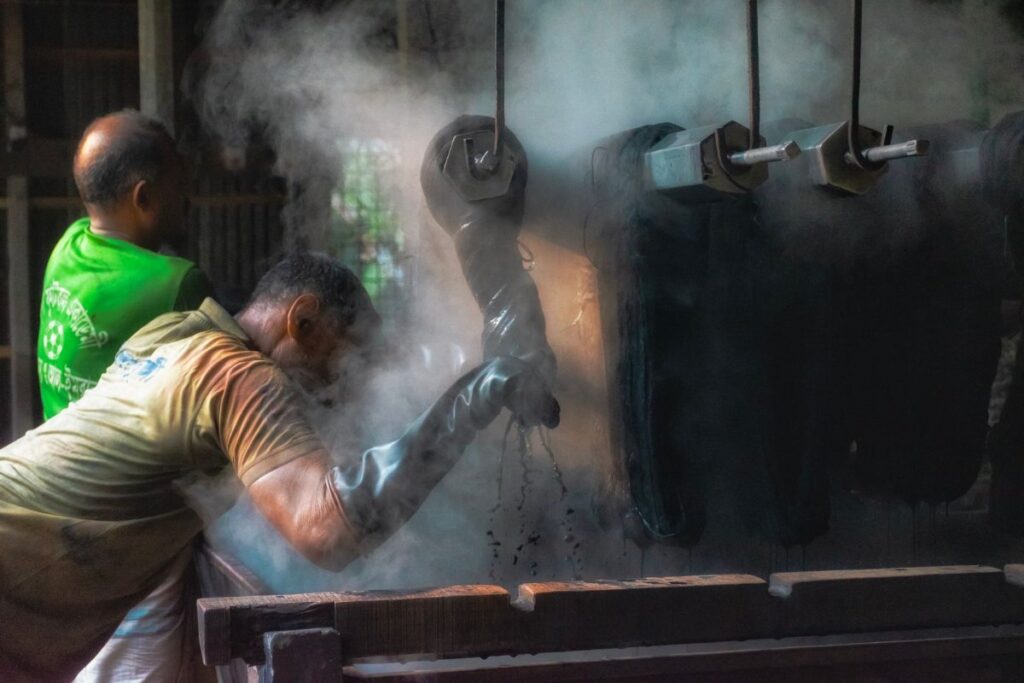
Erode’s real significance in India’s textile supply chain is as a processing hub. A large share of the yarn and fabric dyeing that feeds Tiruppur’s knitwear exports, and a meaningful share of what Karur’s made-up units finish and stitch, passes through Erode’s dyeing and bleaching units first. For a hospitality buyer, that matters in a practical way: colour consistency across a large linen-room order — getting the same white, the same navy piping, the same accent colour across a reorder six months later — depends heavily on which processing house handled the dyeing, and Erode is where a significant portion of that work in the Tamil Nadu textile belt actually happens.
A mill quoting “Karur finishing” on a bed linen order is often relying on Erode for the dyeing stage. Asking a supplier directly where their dyeing happens — and whether that processing house has effluent-treatment compliance in place — is a useful diligence question that most buyers never think to ask.
The compliance question worth raising directly
Textile dyeing is a water- and effluent-intensive process, and Erode’s processing units have historically been more scattered than centrally clustered, which has made common effluent treatment plant (CETP) coverage inconsistent across the district. That picture has been improving — state-level water infrastructure bodies have worked on combined effluent treatment proposals covering Erode alongside Salem, Namakkal, Komarapalayam and Karur, and dyeing units are increasingly installing their own water treatment systems in response to tightening pollution-control norms. For a hospitality buyer with sustainability commitments to report on, asking a supplier whether their dyeing partner has current Tamil Nadu Pollution Control Board (TNPCB) consent and CETP or zero-liquid-discharge (ZLD) linkage is a reasonable and increasingly answerable question, not an unusual one.
Where Erode fits in a multi-cluster sourcing plan
Erode is not a substitute for Solapur’s towel scale or Karur’s made-ups finishing depth — it’s the processing layer that often sits underneath both, plus a growing direct-export base of its own in bed sheets and table linen. A buyer building a supplier map across Tamil Nadu’s textile belt gets a more complete picture by understanding Erode’s role explicitly, rather than treating “Karur” or “Tiruppur” as self-contained answers that don’t account for where the dyeing actually happened.
Celeris Exim maps supplier relationships across the full Tamil Nadu textile belt — Karur, Erode and beyond — including verifying which processing house handles dyeing on your order, so colour consistency and compliance documentation are confirmed before a reorder, not discovered after one goes wrong.
Sources: Apparel Resources, “Erode Silently Growing in Home Segment” · MSME-DI, Industrial Profile of Erode District · Erode district overview, Velalar College of Engineering