
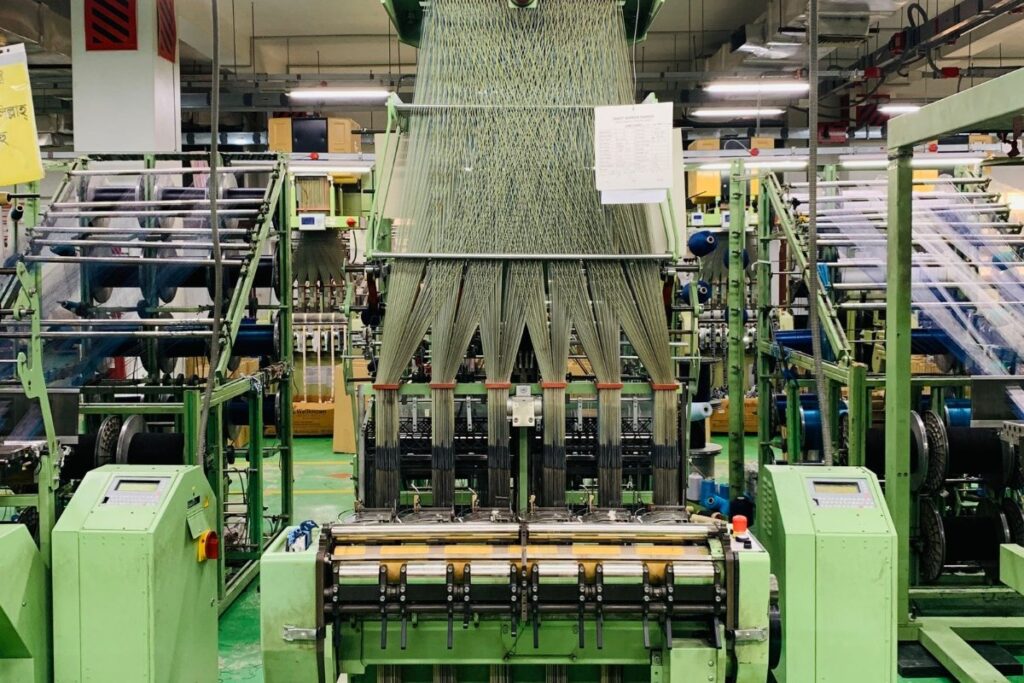
A mill weighing whether to invest in a new circular knitting machine, an upgraded jacquard loom, or automated finishing equipment usually runs the numbers on payback period and financing cost. What often doesn’t make it into that calculation is that the customs duty on importing that equipment doesn’t have to be part of the cost at all. The Export Promotion Capital Goods (EPCG) scheme lets export-oriented manufacturers import capital goods — including spares — at zero customs duty, provided you commit to an export obligation in return. For a mill actively exporting or planning to, that’s a direct reduction in the capital cost of the exact machinery upgrade that improves the export product in the first place.
What the scheme covers
EPCG authorisation covers capital goods for pre-production, production, and post-production — so looms, knitting machines, dyeing and finishing equipment, and quality-testing instruments are all within scope, not just the core weaving or knitting machinery. Specified sectors get zero Basic Customs Duty; other sectors get a concessional rate, with IGST and Compensation Cess exemptions as currently notified. Spares, jigs, fixtures, dies and moulds are also covered, up to 10% of the CIF value of the capital goods themselves, and second-hand capital goods are permitted under conditions — useful if you’re upgrading through a reconditioned machine rather than new equipment.
The export obligation: two numbers to track, not one
The headline obligation is 6× the duty saved on the imported capital goods, to be fulfilled within 6 years of the authorisation date. But there’s a second, less-discussed component: an Average Export Obligation, which requires your exports of the same or similar products to exceed the average of your own performance over the preceding 3 licensing years — the EPCG obligation is over and above your existing export baseline, not a replacement for it. DGFT also monitors fulfilment block-wise: 50% of the obligation is expected within Years 1–4 (Block I), the remaining 50% within Years 5–6 (Block II). Falling behind in Block I without addressing it doesn’t resolve itself in Block II — it compounds.
The MSME concession most eligible mills don’t realise applies to them
If your mill qualifies as an MSME, the specific export obligation is reduced to 75% of the standard requirement, within the same 6-year window. For a small or mid-sized hospitality-linen manufacturer weighing whether an EPCG-funded machinery upgrade is realistic against current export volumes, this concession is often the difference between the obligation looking achievable and looking risky — and it’s worth confirming your MSME registration is current and correctly classified before you apply, since the discount doesn’t get applied retroactively if your status wasn’t on record at authorisation.
What actually gets an authorisation into trouble
Shipping bills only count toward EO fulfilment if the EPCG authorisation details are correctly mentioned on them — a shipment that qualifies for drawback or another reward scheme but omits the EPCG reference doesn’t help discharge your obligation, even though the export genuinely happened. The annual EO fulfilment report is due to your DGFT Regional Authority by 30 April each year, and DGFT audits have flagged import-port discipline as a recurring compliance gap — importing capital goods through a port other than the one registered on the authorisation creates exactly the kind of paperwork mismatch that draws scrutiny later. None of this is complicated, but all of it needs to be tracked deliberately rather than assumed to sort itself out by Year 6.
Worth noting for anyone with an authorisation currently mid-cycle: DGFT granted an automatic extension of EO deadlines, originally due to expire between March and May 2026, out to 31 August 2026, in response to global logistics disruption. If that applies to you and you haven’t confirmed it against your specific authorisation, that’s worth checking before assuming you’re already behind.