
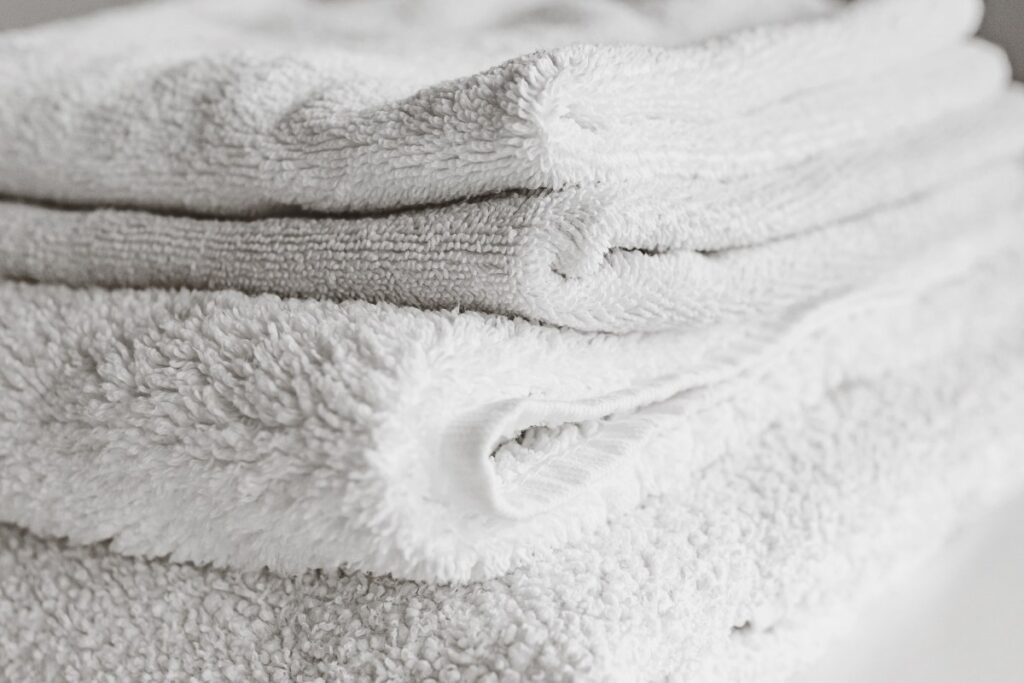
Ask an inexperienced buyer what makes one bath towel better than another, and you’ll usually hear “it feels thicker.” Ask an experienced hotel procurement head the same question, and they’ll answer with a number: GSM. Grams per square metre is the single most quoted specification in hospitality linen sourcing, and it’s also the most misunderstood. A high GSM figure on a supplier’s spec sheet tells you almost nothing about how that towel will perform after its two-hundredth industrial wash. This piece sets out the GSM and thread-count ranges Indian mills actually manufacture to for each hotel tier, and — more importantly — the durability questions that separate a linen order that lasts three years from one that needs replacing in eight months.
GSM by hotel tier: what the market actually specifies
GSM measures the weight of fabric per square metre — for towels, this correlates directly with cotton pile density, absorbency and the plush feel guests associate with quality. Indian mills producing for export hospitality programmes generally work within these bands:
- Budget and economy properties: 300–400 GSM — functional, absorbent, built for high turnover and frequent laundering rather than plushness.
- 3-star hotels: 400–500 GSM — the volume segment most Indian mills are set up to run at scale, balancing feel against laundry-cost economics.
- 4-star hotels: 500–550 GSM — noticeably plusher, still practical for daily commercial laundry cycles.
- 5-star hotels: 600–650 GSM — the tier where guests start to actively notice and remark on towel quality.
- Ultra-luxury and spa properties: 650–700 GSM — heavier towels used in lower-frequency, higher-care laundry programmes.
The mistake we see buyers make most often is treating GSM as a single number to maximise. A 700 GSM towel in a high-turnover 3-star property is a cost and drying-time problem, not a quality upgrade — commercial dryers take longer, energy costs rise, and the extra plushness is wasted on a guest segment that won’t pay for it. GSM should be matched to the operating model, not just the brand aspiration.
Thread count for bed linen — and why the number alone misleads
For sheets, pillowcases and duvet covers, the equivalent buyer shorthand is thread count (TC). The ranges Indian mills typically quote by tier are:
- Budget/1–2 star: 180–200TC
- 3-star: 200–300TC
- 4-star: 300–400TC
- 5-star: 400–600TC
- Ultra-luxury: 600–800TC
Here’s the detail most spec sheets don’t volunteer: a 400TC sheet woven from long-staple cotton (Giza, Suvin, or premium Indian extra-long staple varieties) will consistently outperform a 600TC sheet woven from short-staple cotton — in hand-feel, in pilling resistance, and in how it holds up over repeated commercial laundering. Thread count is a manufacturing specification; staple length and yarn quality are what actually determine guest-facing feel and product life. When you’re comparing quotes from two mills at the “same” thread count, ask about staple length and yarn count before assuming the products are equivalent.
The durability question buyers should be asking
GSM and thread count describe a product on day one. Hospitality linen has to perform through 150–300+ industrial wash cycles a year, at commercial-laundry temperatures and with harsher detergents and disinfectants than any domestic setting. This is where sourcing decisions are actually won or lost, and where a written specification should go further than a fabric weight:
- GSM retention after washing: Ask the mill for wash-test data showing GSM and dimensional stability after a defined number of industrial wash cycles — a genuine hospitality-grade towel should hold the bulk of its weight and pile after 50+ cycles, not just on the showroom sample.
- Shrinkage tolerance: Reputable mills pre-shrink (sanforize) hospitality fabric and will quote a shrinkage percentage — typically under 3–5% — rather than leaving you to discover it after the first commercial wash.
- Colorfastness to washing and chlorine bleach: Hotels use bleach-based disinfection routinely; ask for a colorfastness rating (commonly tested to AATCC or ISO standards) specific to that exposure, not just to normal washing.
- Seam and hem construction: For towels specifically, dobby border strength and double-stitched hems matter more at high wash frequency than they do in retail products.
A mill that can produce and hand over this data without hesitation is telling you something important about its own process control — it means they’re testing internally, not just weighing fabric off the loom.
Where Indian mills specialise, and why it matters for sourcing
India’s hospitality-linen manufacturing base is clustered by product type: Solapur mills are built around bath linen (towels, bathrobes) at scale, with deep GSM-range flexibility from budget through ultra-luxury; Karur’s strength is made-ups and terry products with strong export documentation infrastructure already in place. Buying from a cluster that specialises in your product category, rather than a general-purpose mill producing a bit of everything, is usually the fastest route to consistent GSM and wash-performance across repeat orders — consistency batch-to-batch is arguably a bigger risk than the initial spec.
Putting it into your sourcing brief
A specification that protects you should state: the GSM or TC range, the fibre and staple length, a shrinkage ceiling, a colorfastness standard, and a request for wash-cycle test data before the first bulk order is confirmed. That last point is the one buyers skip most often — and the one that prevents an expensive reorder six months in.
Sourcing to the right spec, not just the highest number
The right GSM and thread count for your property is the one that matches your guest tier and your laundry programme — verified with real wash-performance data, not just a fabric-weight figure on a quotation. Celeris Exim works with hospitality buyers to translate a property’s positioning into a precise mill specification, and to verify that the mill supplying you can actually hold that spec at scale.