
The most common mistake a first-time Australia or New Zealand buyer makes when sourcing hospitality linen from India isn’t about price or quality — it’s about time. Ocean freight from India to ANZ ports runs a full month or more, and a buyer who plans a linen programme the way they’d plan a domestic order, with production and shipping treated as a rounding error, ends up with stockouts, rushed reorders, or a pre-opening date that slips.
The realistic transit window
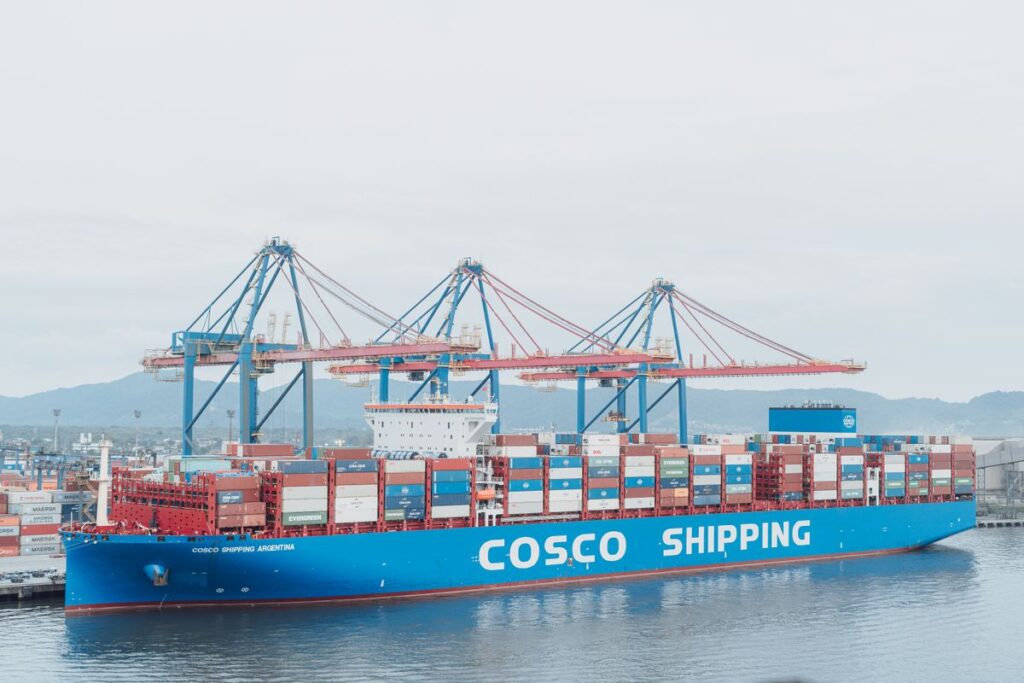
Sea freight from Indian ports to Australia typically takes twenty-five to thirty-five days, and that figure already accounts for the transshipment most India-origin cargo goes through at a hub port before its final leg into Sydney, Melbourne, Brisbane or Fremantle. New Zealand-bound cargo generally adds a further leg on top of the Australian route, since most shipments transship again for the Trans-Tasman crossing rather than sailing direct. On top of ocean transit, a buyer needs to budget for production lead time at the mill — commonly three to six weeks depending on order size and whether fabric needs to be woven and processed to spec or is available from stock — plus origin documentation, port cut-offs, and destination customs clearance. Add it up honestly and a first order from enquiry to warehouse can run ten to fourteen weeks, sometimes longer for a large or highly customised programme.
Where sailing schedules add uncertainty
Because most India-ANZ cargo relies on transshipment rather than direct sailings, schedules are less predictable than a direct point-to-point route would be — a missed connection at the transshipment port can add a week without much warning. That’s a real operational risk, not just a theoretical one, and it’s the reason experienced buyers build a buffer into their reorder trigger point rather than ordering exactly when stock looks tight.
Planning inventory cycles around the actual lead time
The practical fix isn’t rushing production or air-freighting linen — both are expensive ways to solve a planning problem. It’s setting reorder points around the realistic ten-to-fourteen-week door-to-door window rather than the optimistic one, and building a par-stock buffer that accounts for the sailing-schedule uncertainty above. For a hotel or distributor with predictable, recurring linen consumption, this usually means placing the next order well before current stock looks low, rather than waiting for a visible shortage to trigger action.
Consolidation is worth the coordination effort
Because ocean freight cost is driven heavily by container utilisation, a buyer ordering bed linen, bath linen and table linen from the same mill cluster benefits from consolidating those categories into a single shipment rather than placing three smaller orders at different times. This is especially relevant for a distributor or hotel group sourcing across the Solapur and Karur clusters, where combining a full linen programme into fewer, fuller containers reduces freight cost per unit meaningfully compared with multiple partial-container shipments. It does require more upfront coordination on production timing across categories, but for a recurring buyer, that coordination pays for itself within a year or two of ordering.
Building this into a pre-opening or refurbishment timeline
For a hotel working to a fixed opening date, the linen order needs to be placed against the ten-to-fourteen-week window worked backward from the date linen actually needs to be on-site for setup and staff training — not the opening date itself. Buyers who treat linen sourcing as one of the earliest procurement decisions in a pre-opening plan, rather than something handled once the property is closer to ready, are the ones who avoid the scramble that a compressed timeline forces on everyone involved, mill included.