
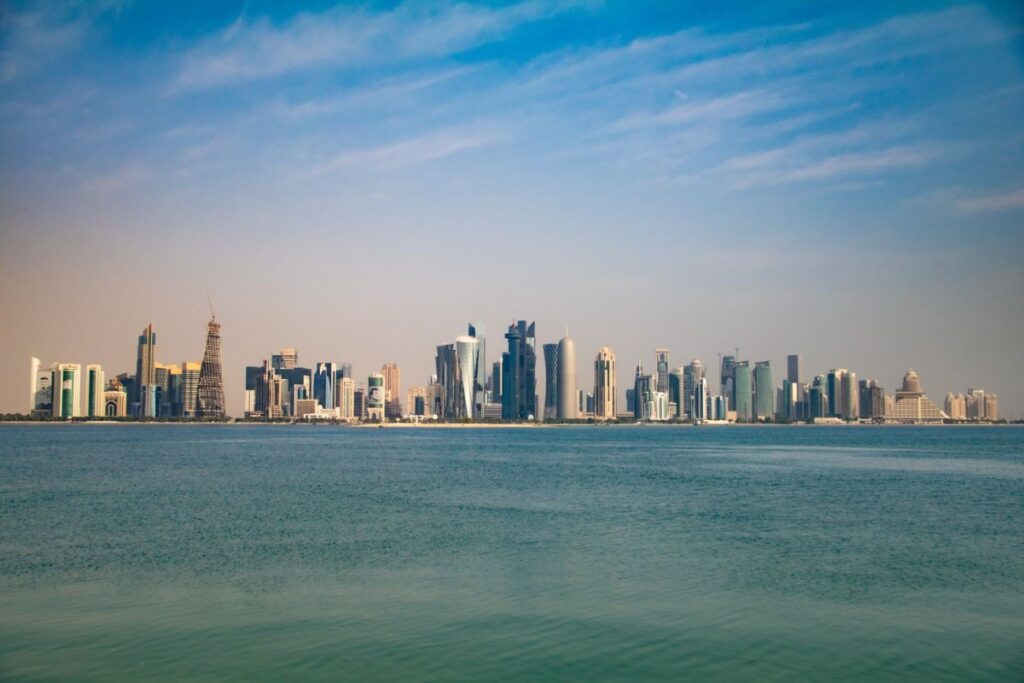
Two hospitality markets on the same peninsula, at very different stages of the same build cycle: Saudi Arabia is mid-construction on what is probably the largest hotel-room pipeline on earth right now, and Qatar is past its own construction peak and settled into the steady replacement rhythm that follows one. For an Indian mill deciding where to point export development effort next, both are worth understanding on their own terms rather than as a single “GCC” line item.
Saudi Arabia: a pipeline still being built, not one to catch up to
Vision 2030’s giga-projects — NEOM, Red Sea Global, Qiddiya, Diriyah Gate, among others — are collectively adding hotel room inventory at a scale that has no real precedent in the region. What matters for a linen mill isn’t the master-plan numbers, which are large enough to be abstract, but the practical implication: this is greenfield demand. New-build hotels need a full initial linen fit-out — not a replacement order for a property that already has a supplier relationship, but a first order where the buyer is genuinely evaluating options. That’s a meaningfully easier door to walk through than trying to dislodge an incumbent supplier at an established property, and it rewards mills that get into the conversation with hotel FF&E procurement teams and OS&E distributors early, well before rooms are ready for handover.
Qatar: past the construction spike, into steady-state replenishment
Qatar’s hospitality infrastructure build-out around the 2022 World Cup is essentially complete, and the market has settled into the replacement cycle that follows any large hotel build: linen doesn’t last forever, and a five-star property replacing its bed and bath programme on an eighteen-to-thirty-month cycle is a more predictable, recurring order than a one-time construction fit-out, even if the initial order size is smaller. For a mill, this is the difference between chasing new-build wins and building the kind of repeat relationship that’s easier to forecast production capacity against.
The duty picture: modest, not zero, and not preferential to India specifically
Both Saudi Arabia and Qatar apply the GCC Common External Tariff, which sits around 5% on most goods including textiles — low by global standards, but not a zero-duty arrangement the way UAE-India CEPA is, and there is currently no dedicated India-GCC free trade agreement that would change that. The realistic pitch to a Saudi or Qatari buyer isn’t “we’re duty-free,” it’s “landed cost including a modest 5% duty still comes in competitive against European or Turkish alternatives,” which for most hospitality-linen categories continues to hold up on price and lead time from an Indian mill with a direct shipping lane into Jeddah, Dammam, or Hamad Port.
What a mill actually needs before approaching this market
Buyers in both markets, particularly the five-star and luxury segment that dominates new Saudi inventory, will ask for documentation before they ask for a sample: export track record, quality certifications relevant to hospitality textiles, and increasingly some form of sustainability or compliance credential given the sustainability commitments both Vision 2030 and Qatar National Vision attach to major developments. Getting that documentation organised before the first outreach email, rather than assembling it reactively once a buyer asks, is usually what separates a mill that converts an introduction into an order from one that doesn’t.